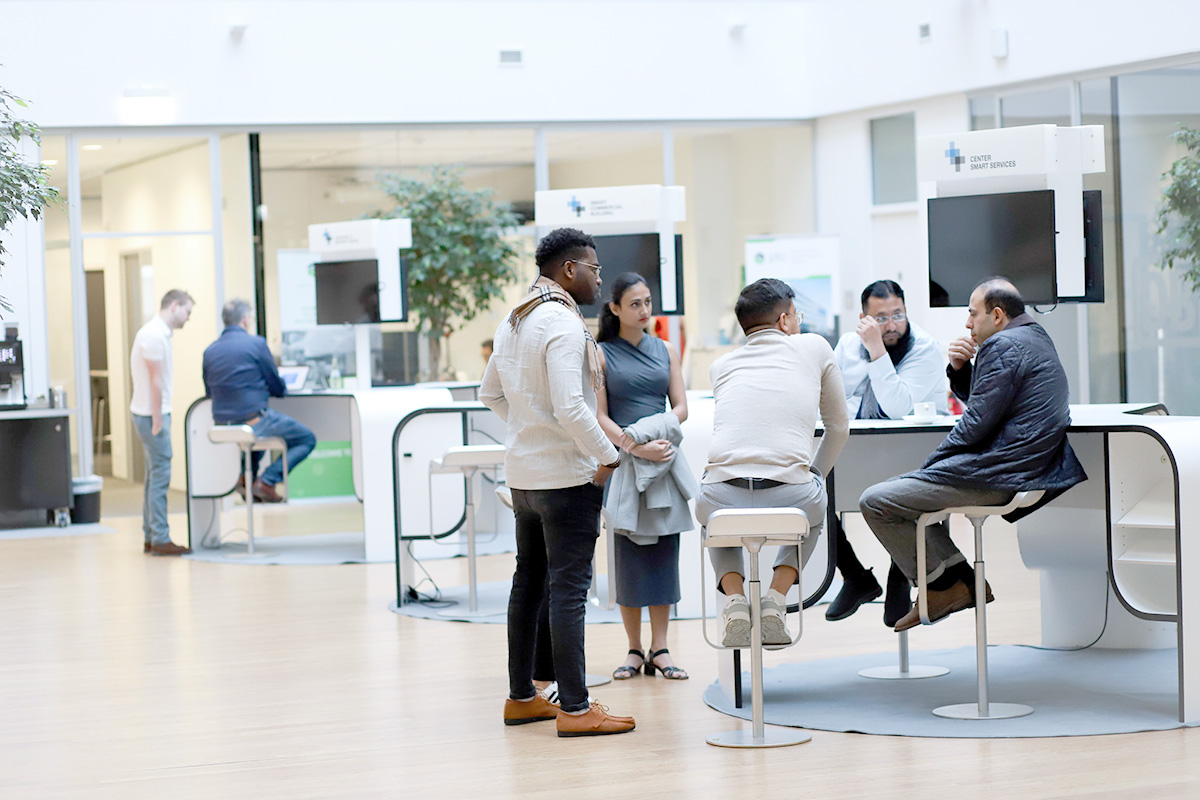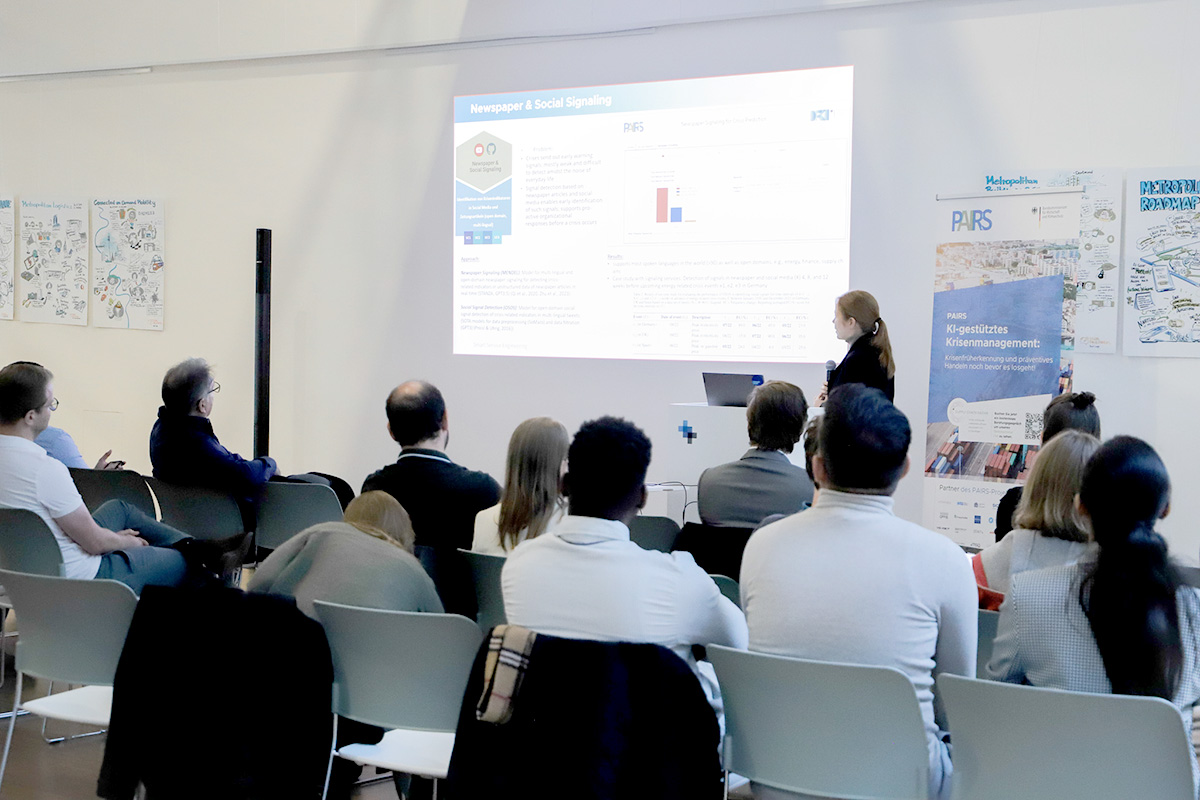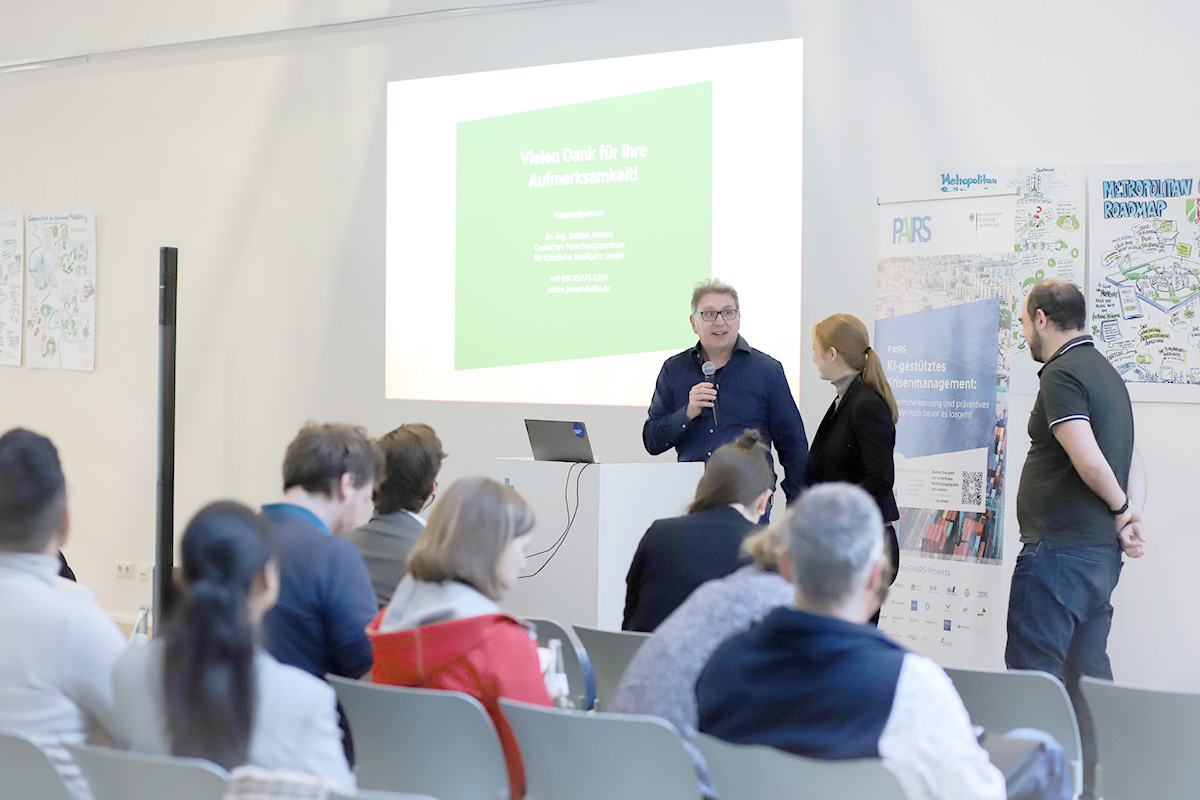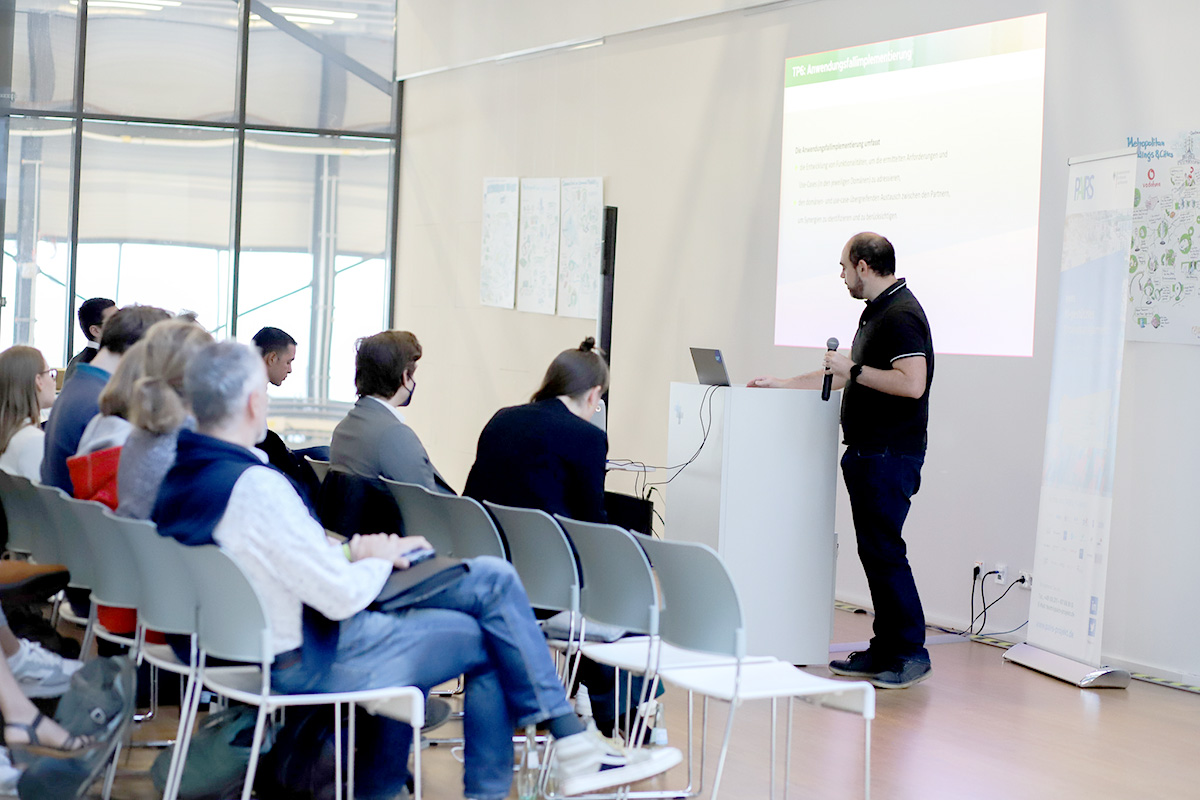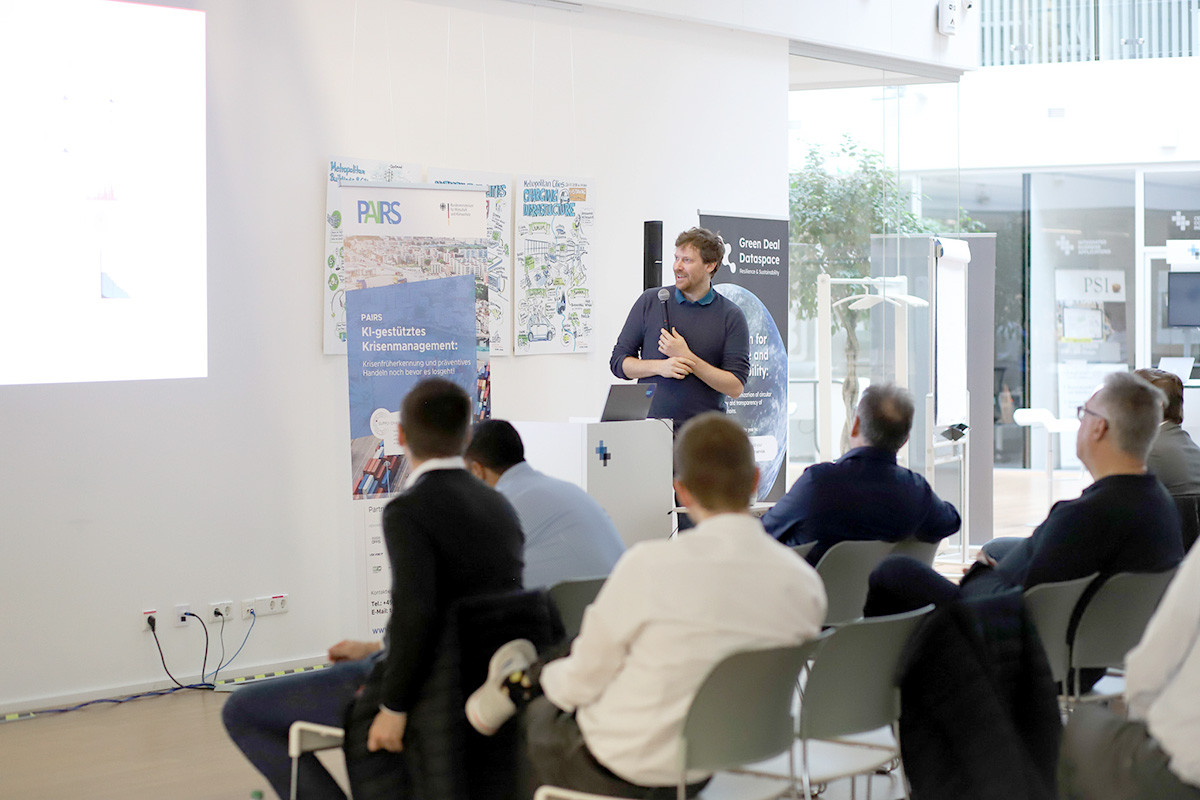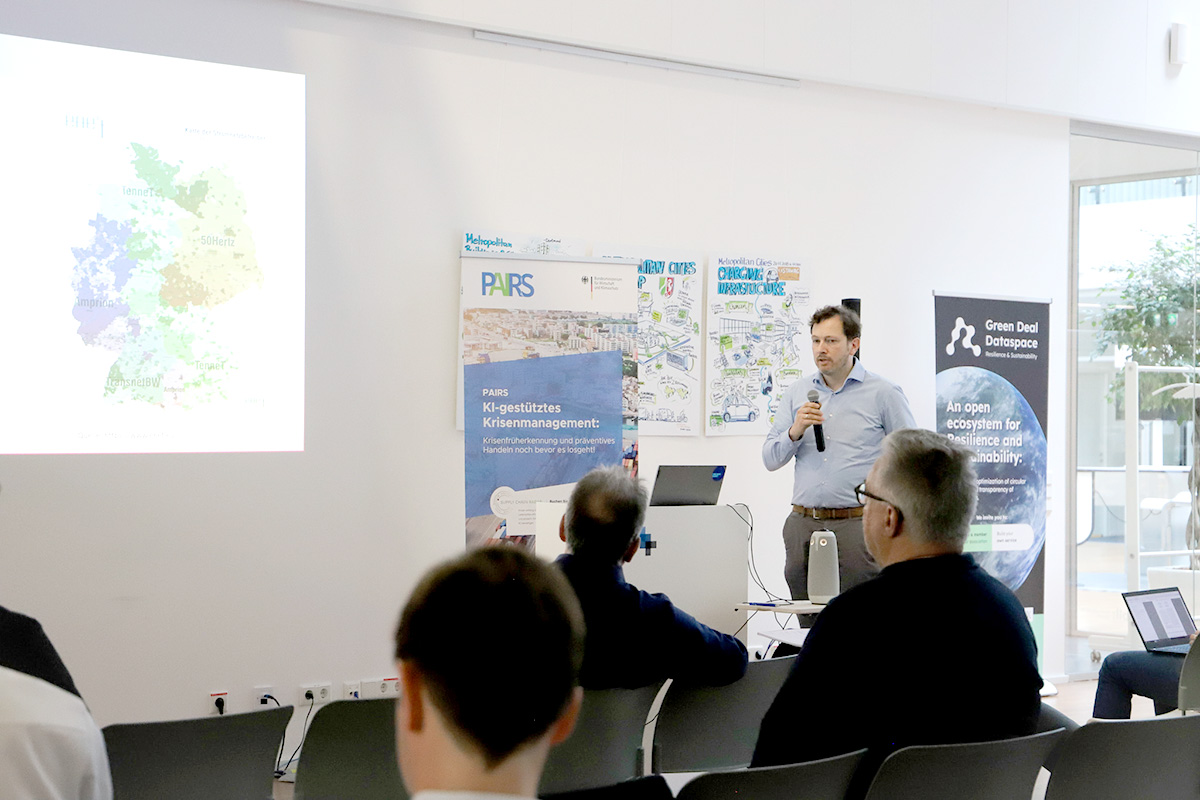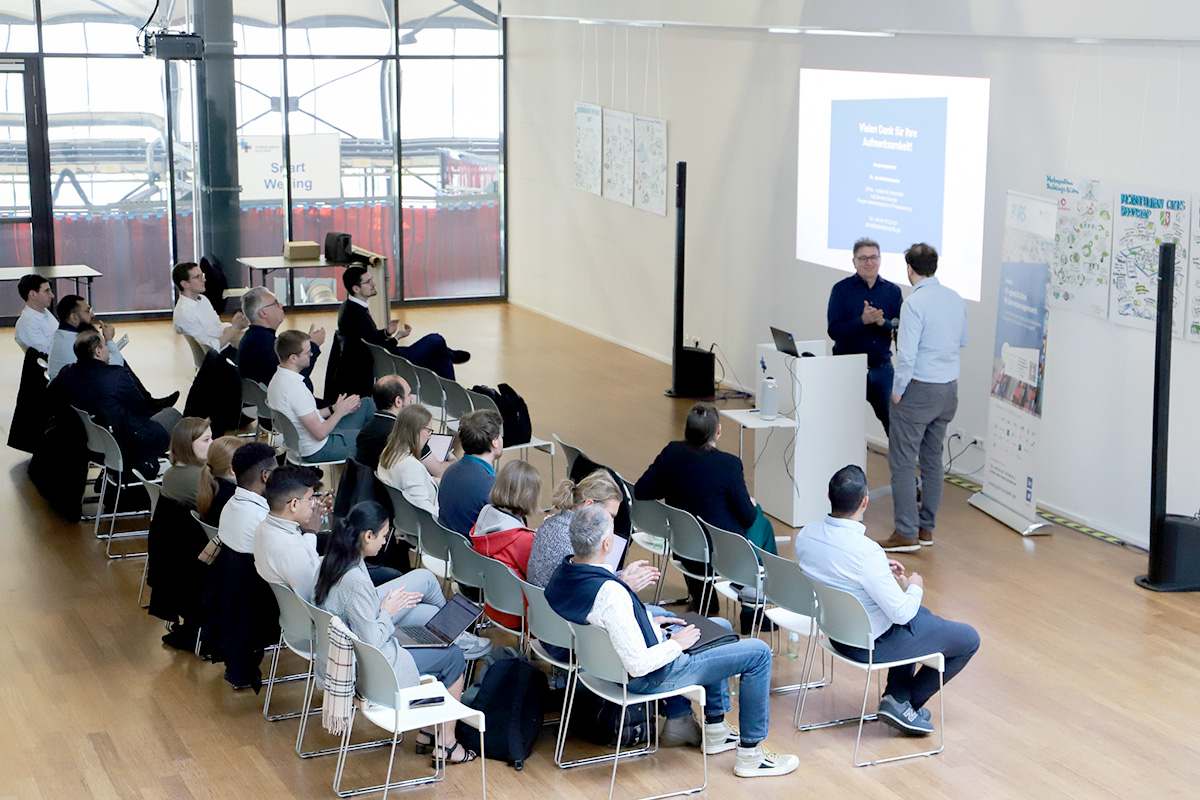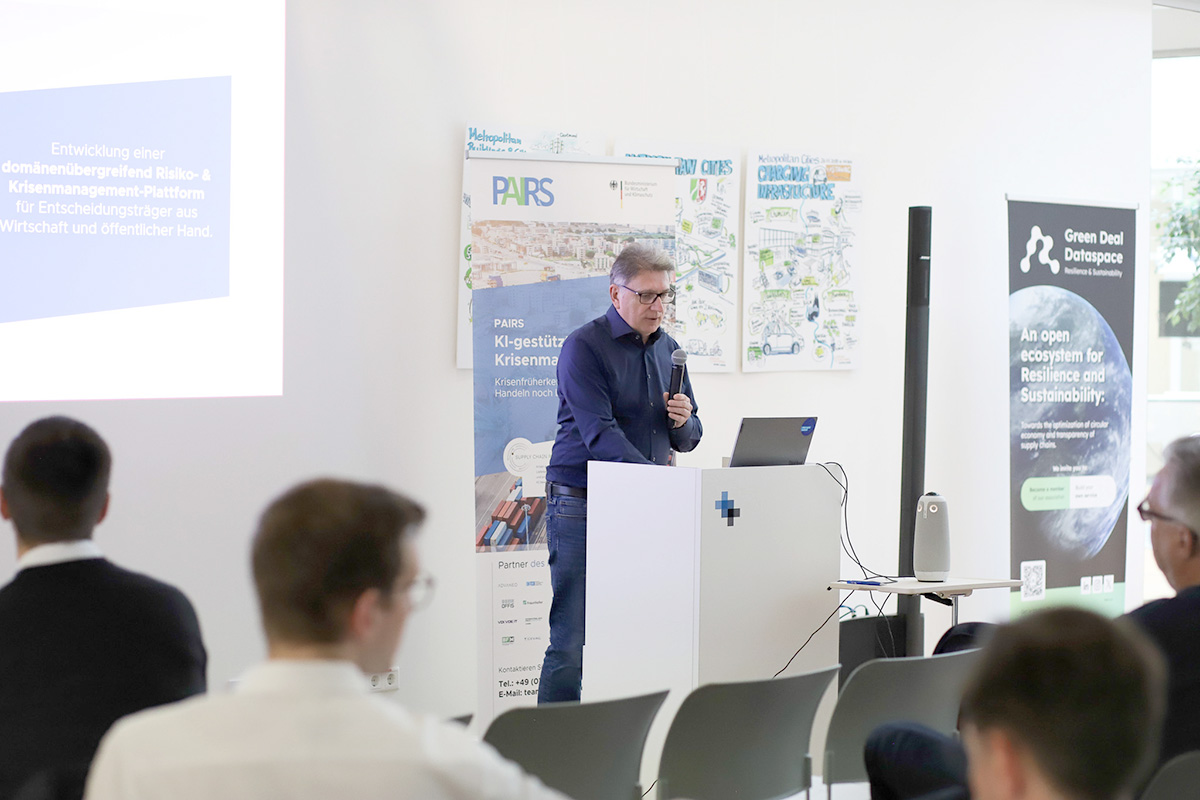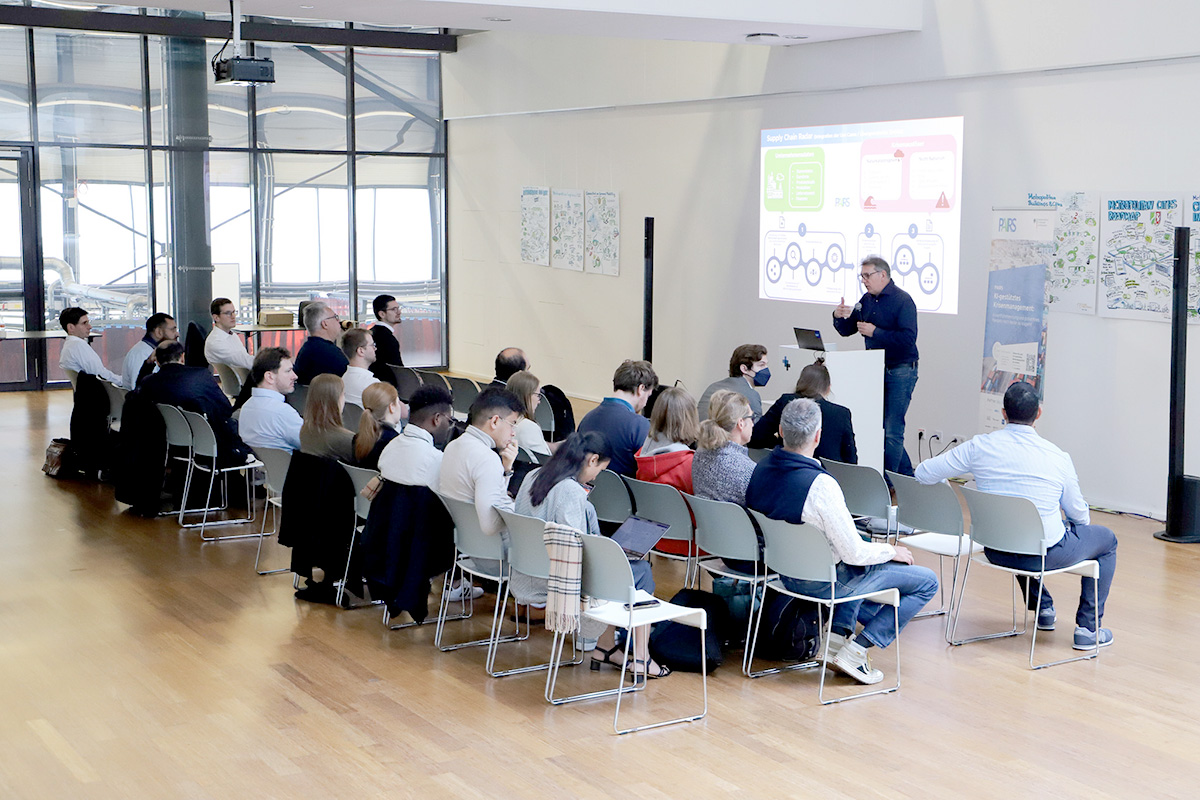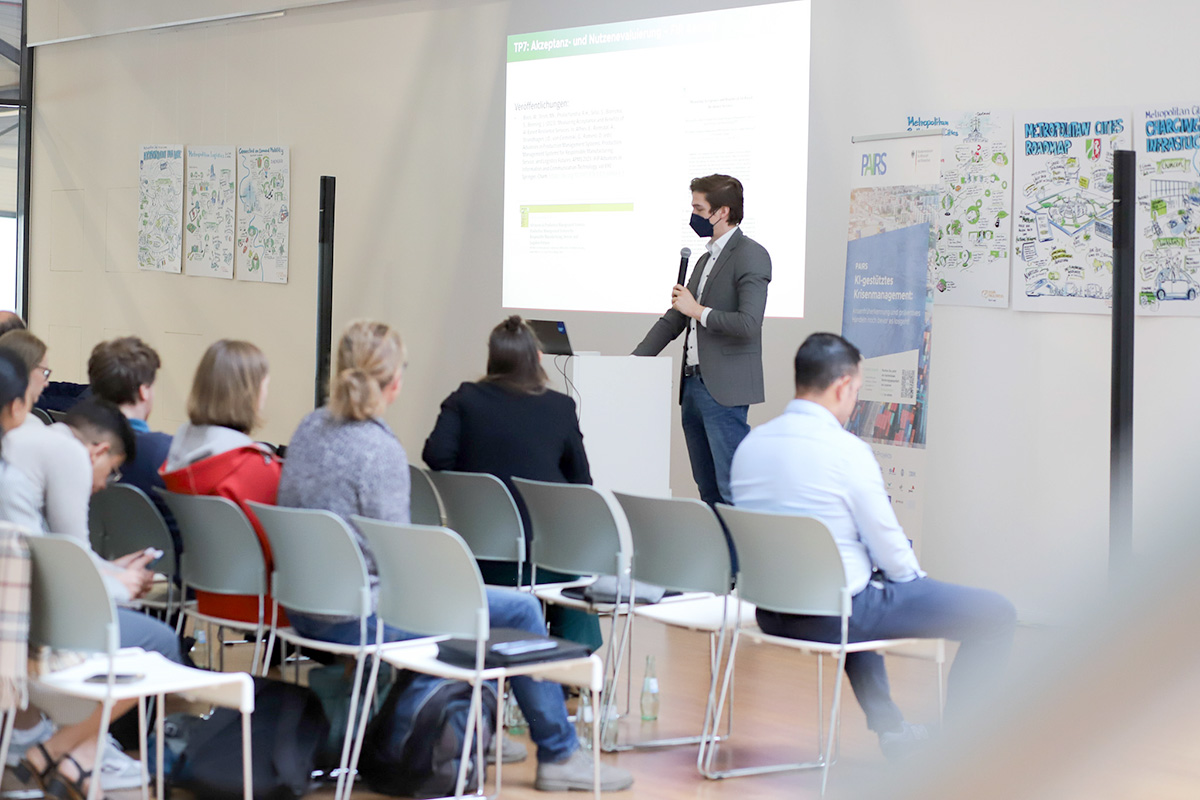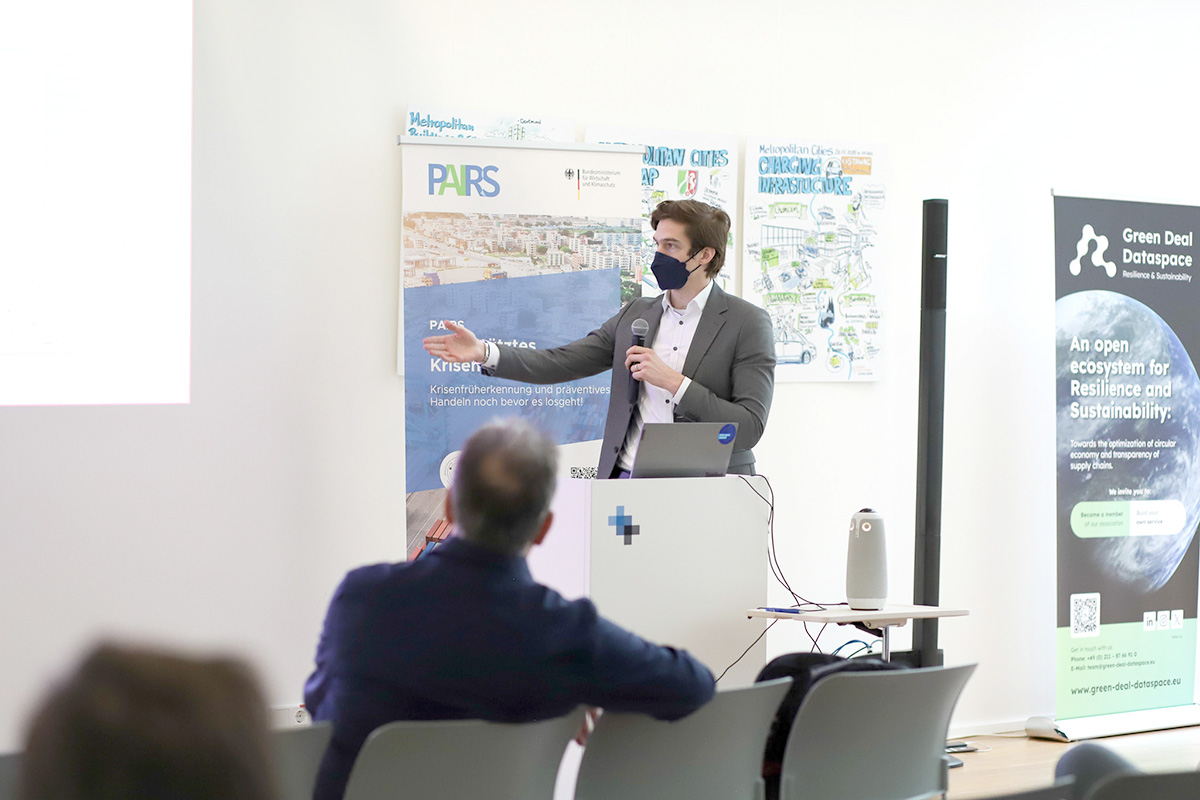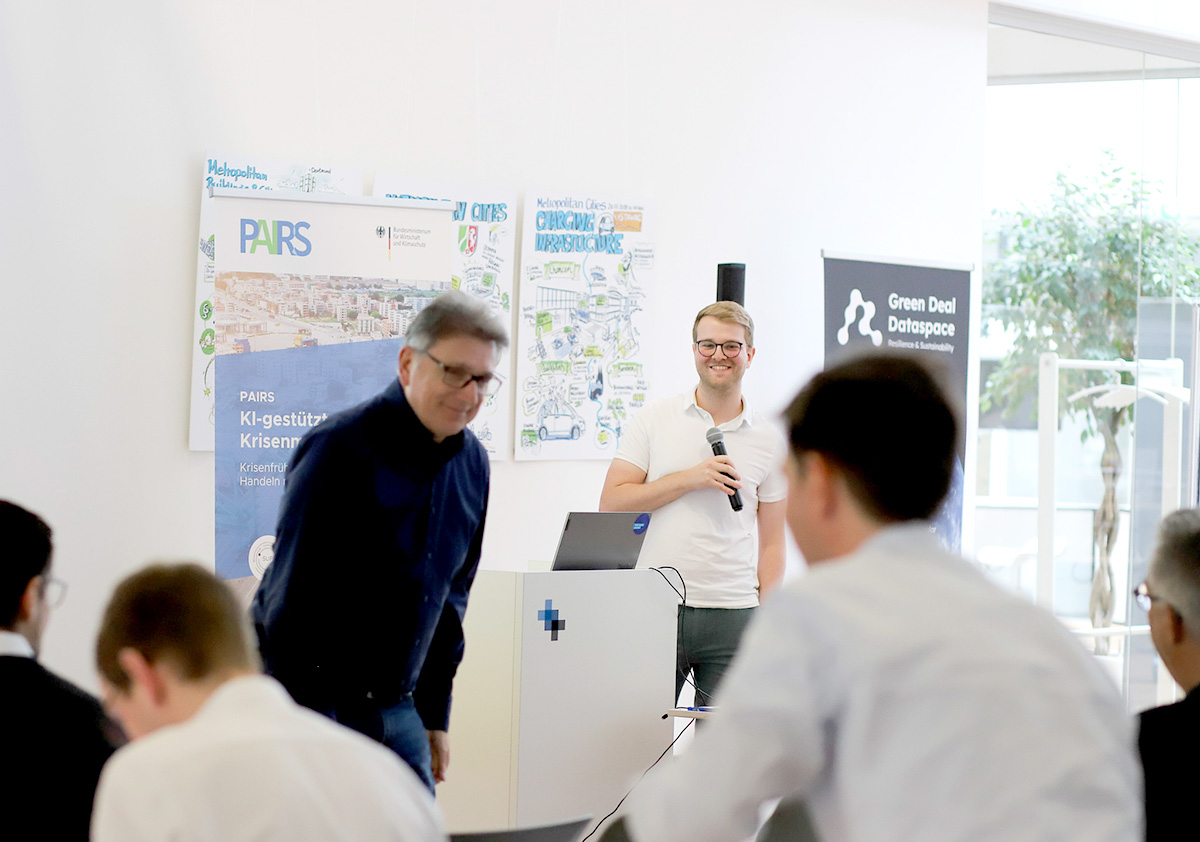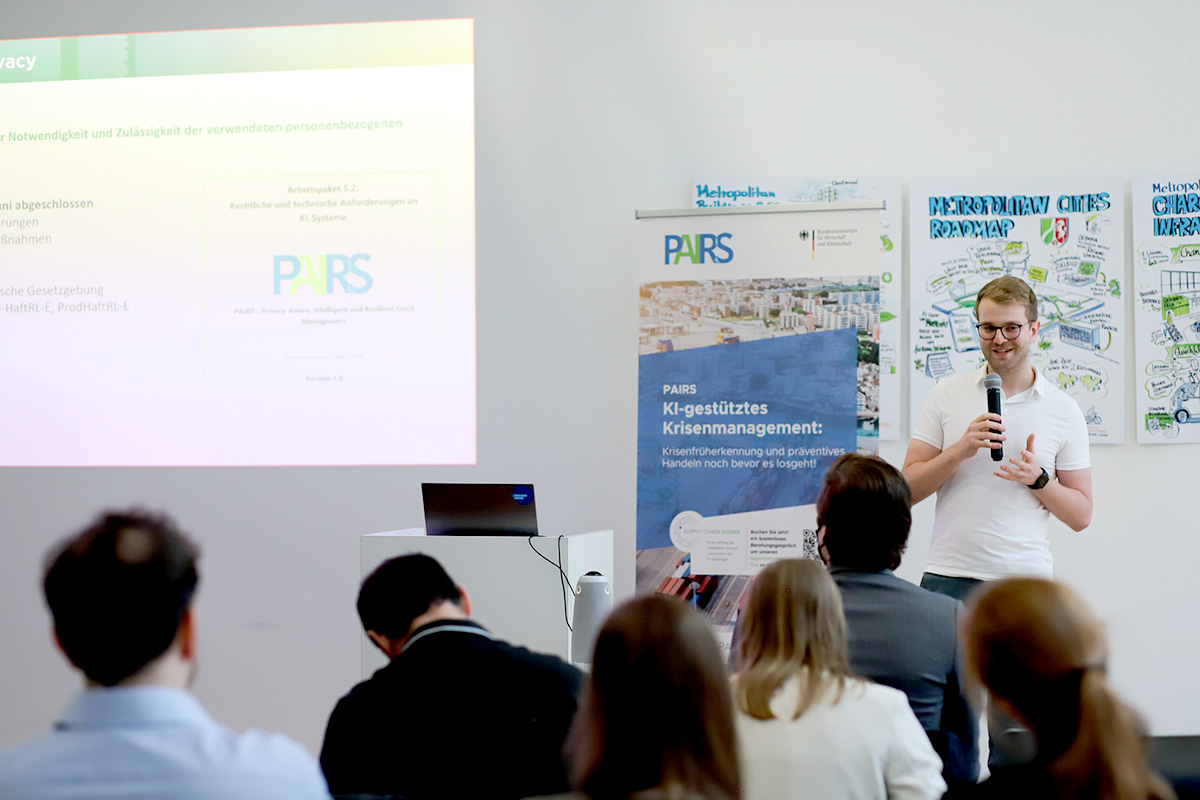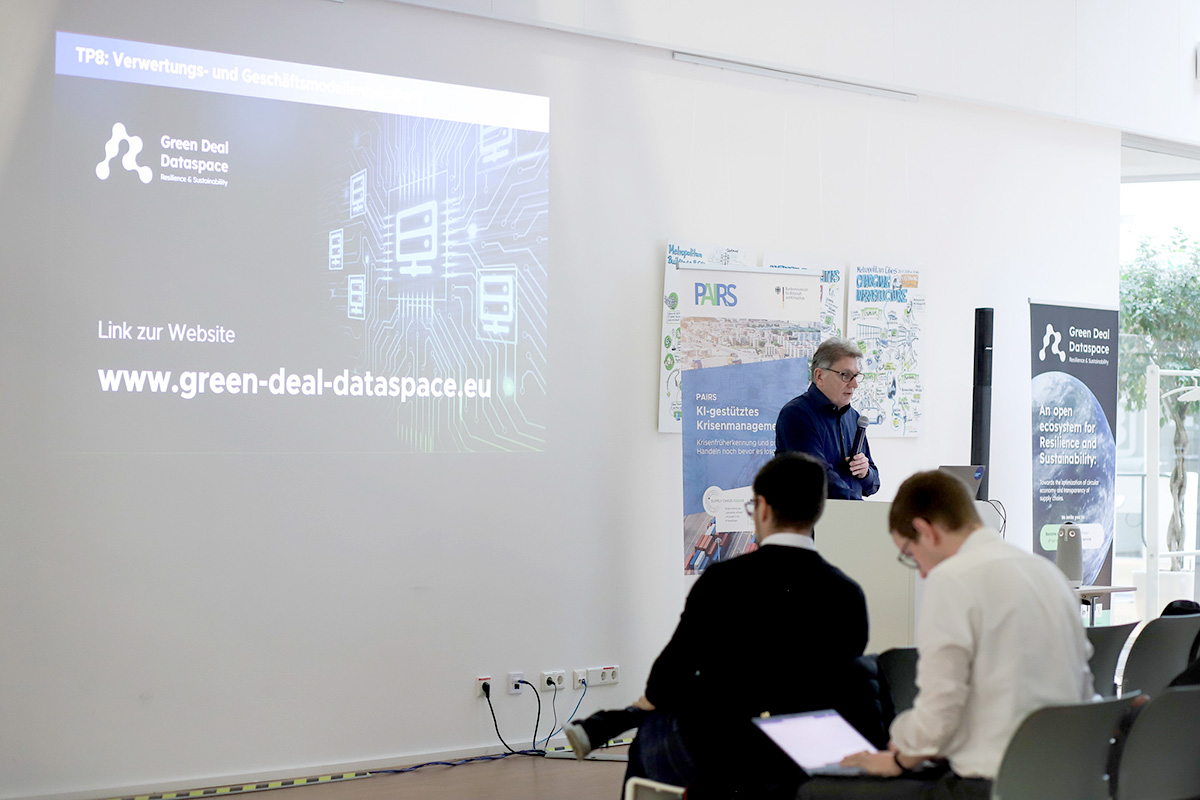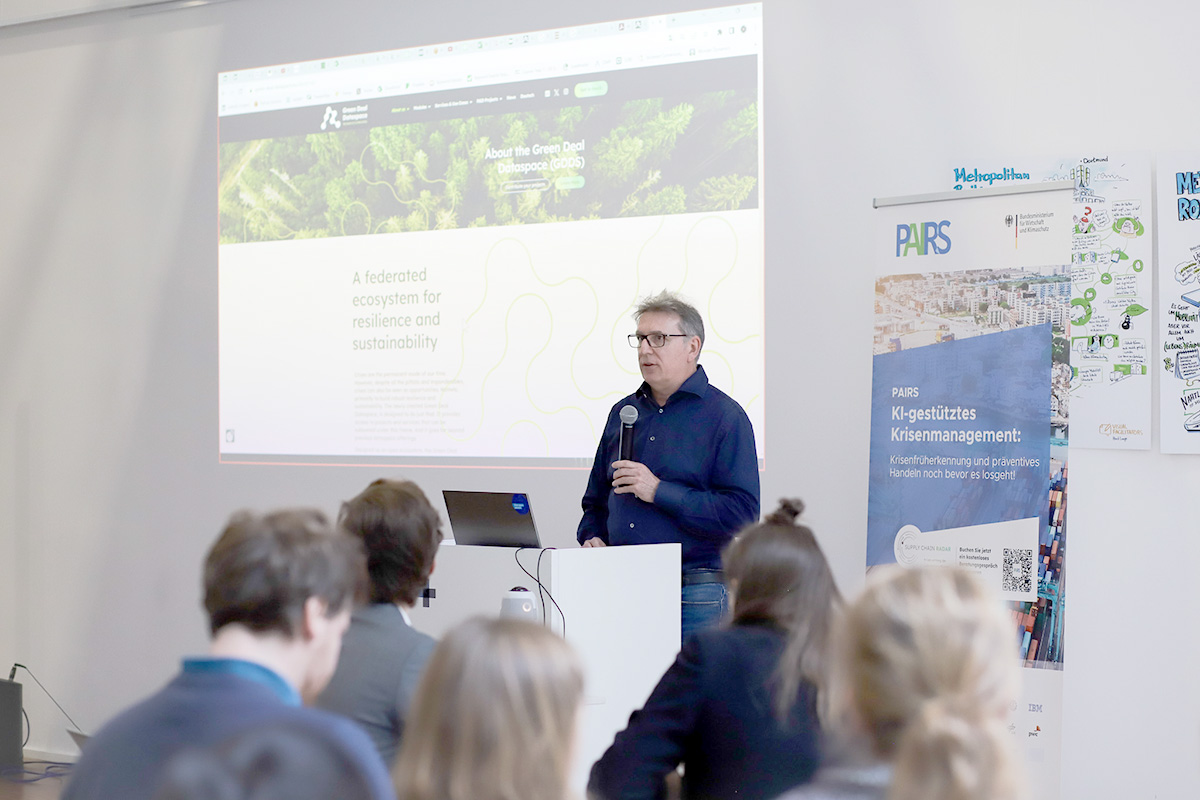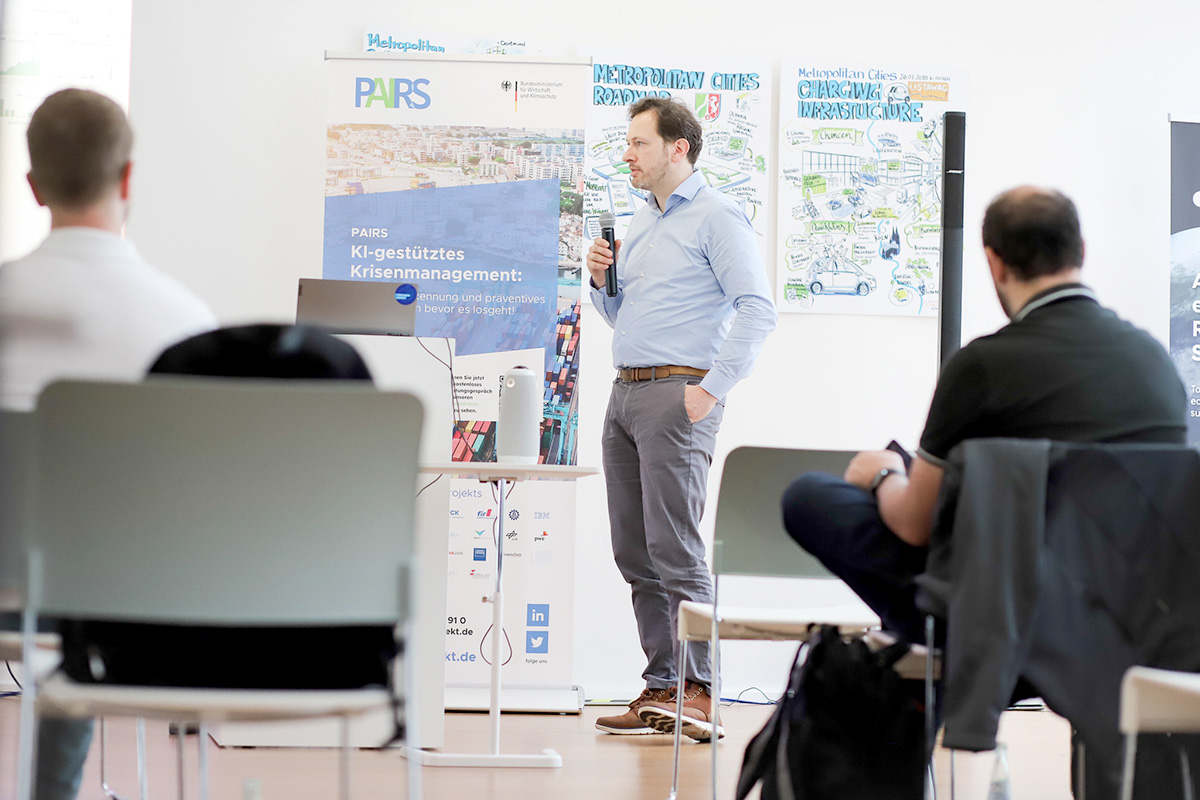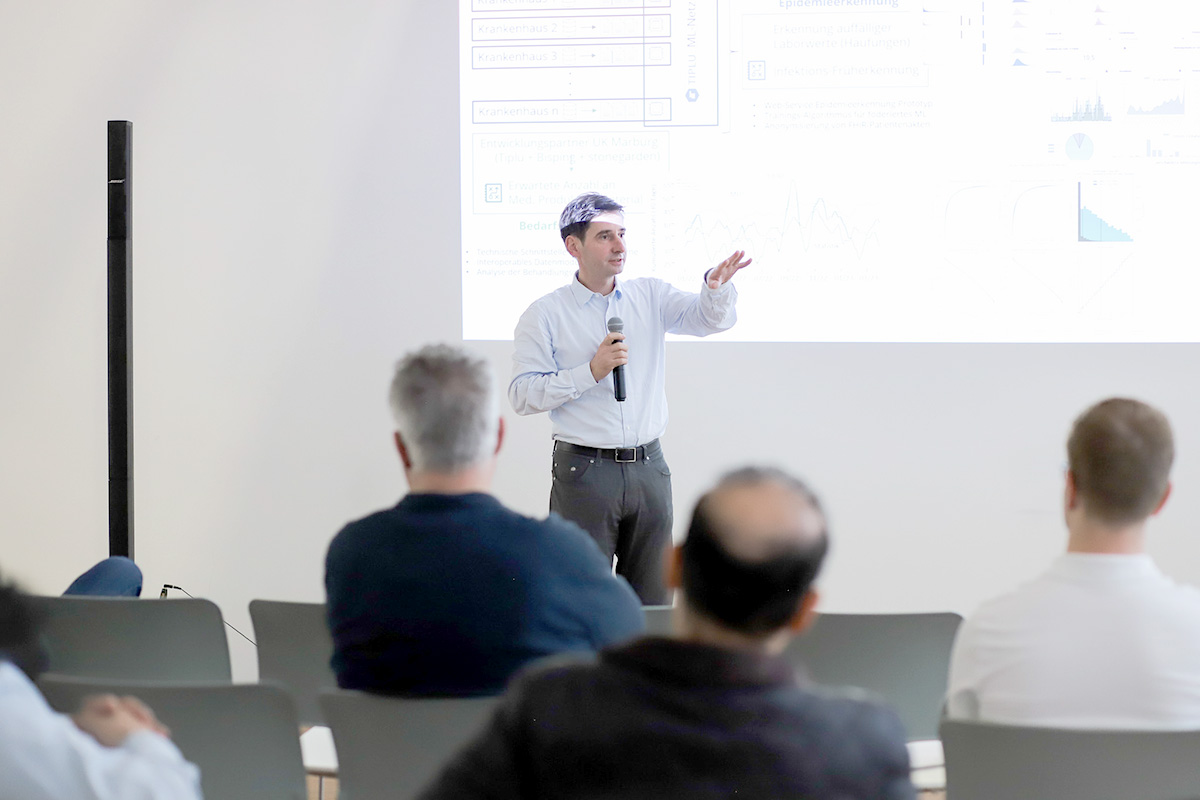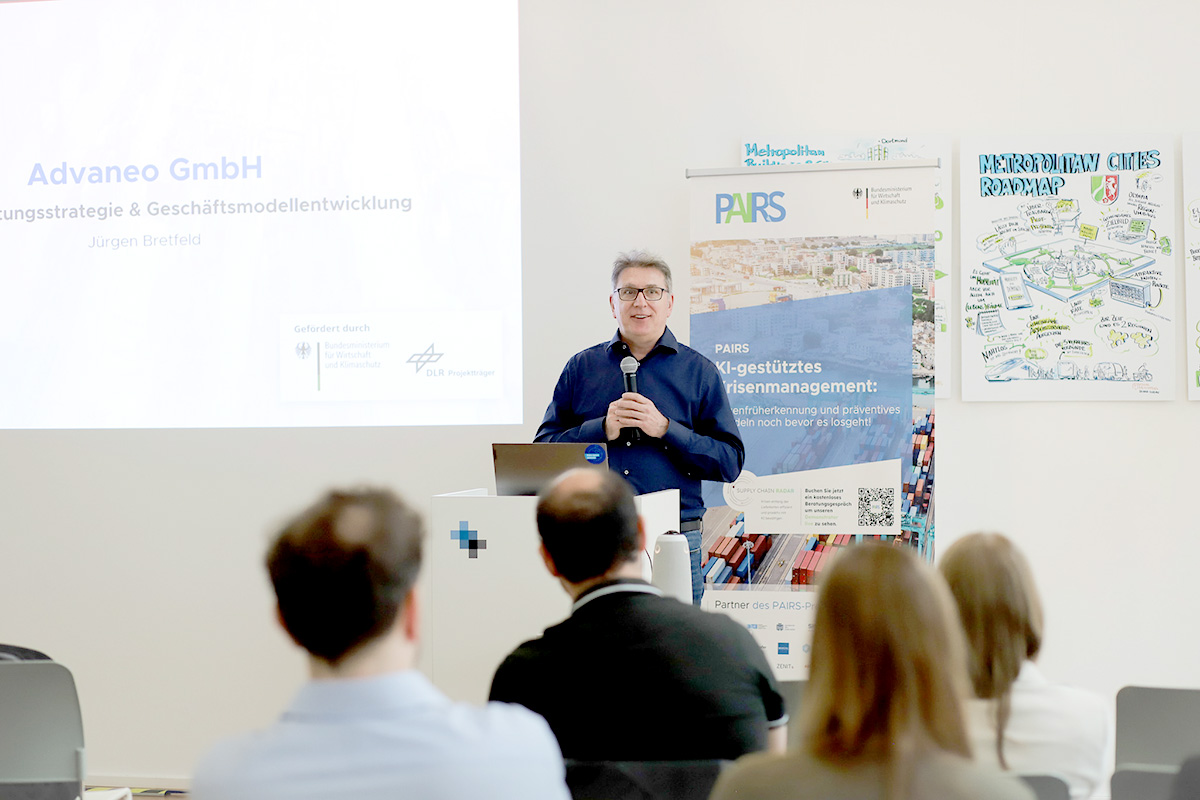
From October 18 to 19, this year’s consortium meeting of the PAIRS research project took place at FIR at RWTH Aachen University. Presentations and various workshops invited participants to engage in professional and personal exchange.
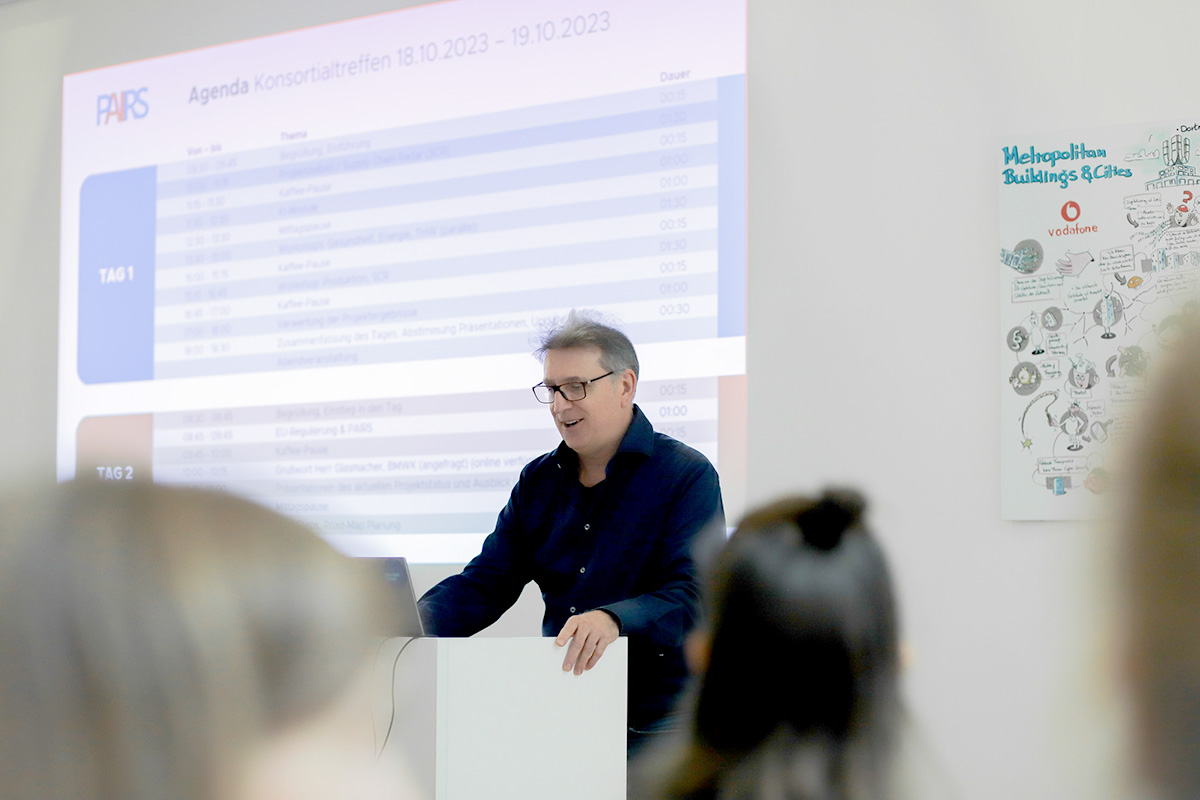
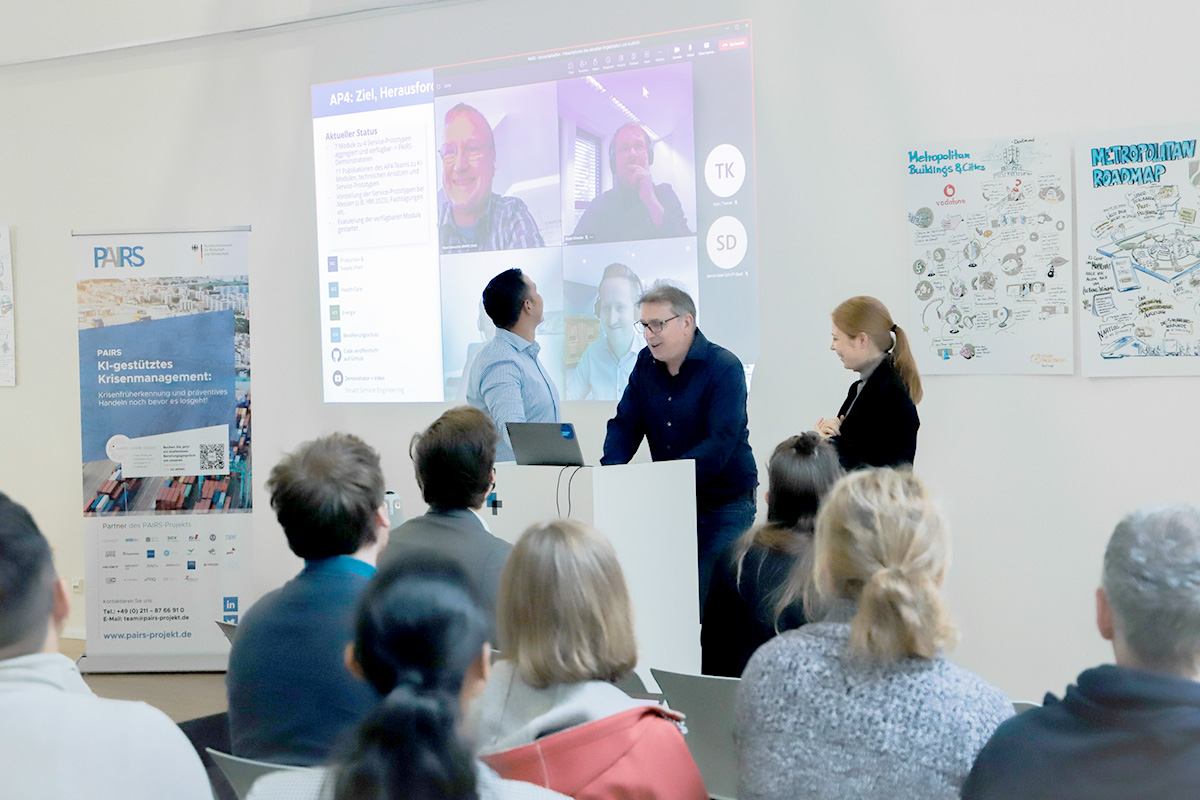
While the first day focused on workshops regarding AI tools and use cases in the areas of health, energy, production, and the Supply Chain Radar, the following day discussed the project status and outlook for individual use cases. In this context, Dr. Klaus Glasmacher from the Federal Ministry for Economic Affairs and Climate Action (BMWK) emphasized in his welcome address the importance of exploiting the project results.
With an exchange on the next steps and goals to be achieved by the end of the project, this year’s consortium meeting of the PAIRS research project concluded.
More about the PAIRS project: www.pairs-projekt.de
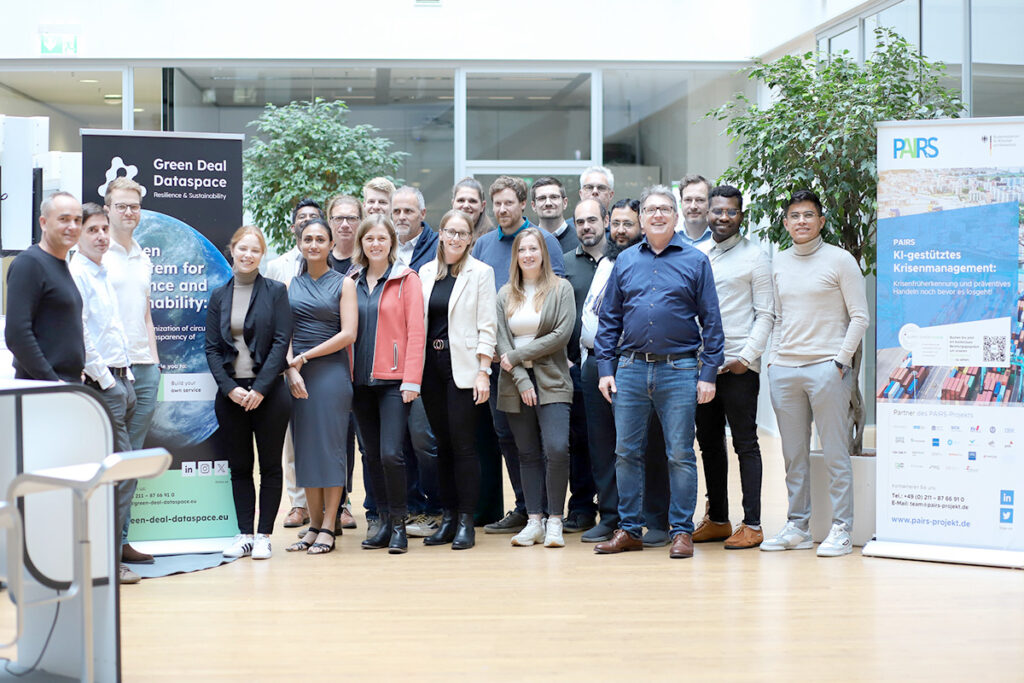
f. l. t. r. Back row: Kajan Kandiah, Lukas Stratmann, Regina Schrank, Norbert Reich, Fabian Konopka from left to right. middle row: Klaus Weingarten, Michael Stein, Dr. Moritz Augustin, Eduardo Colangelo, Akhtar Ali, Dr. Jan Reinkensmeier l. to r. front row: Manfred Haberer, Dr. Steffen Wischmann, Nils Wiedemann, Natalie Gdanitz, Prajvi Saxena, Bianca Henning, Theresa-Franziska Hinrichsen, Merlit Kirchhöfer, Jürgen Bretfeld, Pascal Ahiagble, Lotfy Abdel Khaliq