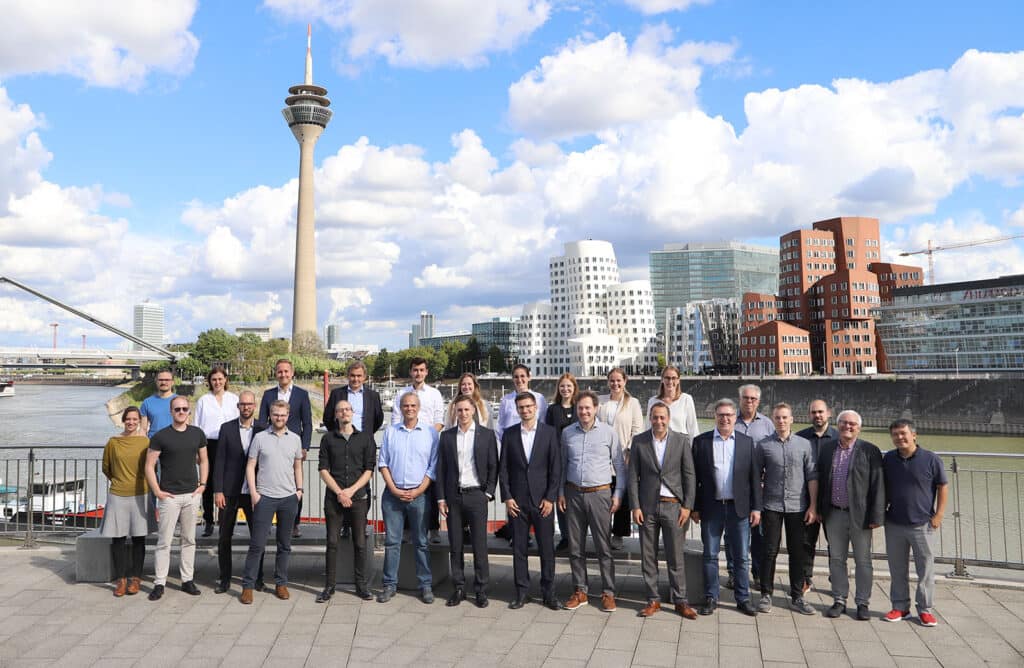
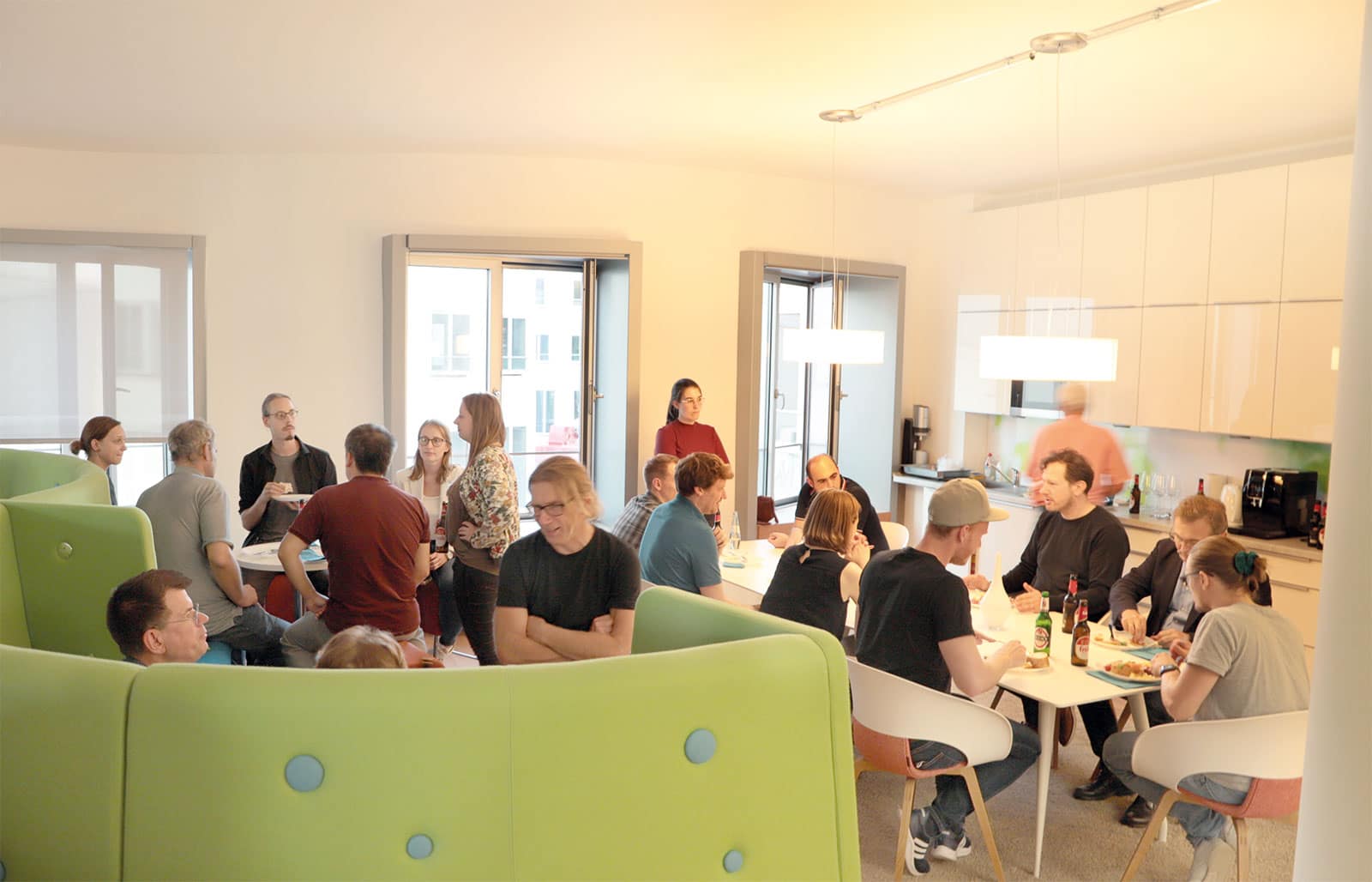
The first in-person consortium meeting of the PAIRS project took place from September 7 to 8 in Düsseldorf. Workshops were held on individual use cases and other subprojects. At the same time, an important overview of progress to date was discussed intensively and an outlook on further work was agreed.
Once again, the issue of threatened and collapsing supply chains was in focus. In this context, the new Supply Chain Radar forms an overarching framework for all use cases across the different domains.
The second day focused on associated partners, the project sponsor, accompanying research, and the BMWK. In addition to presenting results to date and the next goals, there were insightful contributions from subprojects on artificial intelligence as well as data protection and data security. New challenges in view of the upcoming Data Act regulation and its relevance to the PAIRS research project were proactively highlighted.
In his opening speech, Dr. Glasmacher, representing the BMWK, emphasized the need for future work to address the looming energy shortage and associated aspects in further use cases. Finally, joint efforts should be made to attract even more potential application partners in order to build the PAIRS platform in a practice-oriented manner from an industry perspective.
More about the PAIRS project: www.pairs-projekt.de