AI – but how? A game changer in marketing
Artificial intelligence has long since arrived in cultural marketing. It is transforming communication, mediation, data work and internal processes – and is confronting cultural institutions with key questions: How can AI be used responsibly? How can quality, transparency and a distinct cultural voice be preserved? And how can institutions retain control over their data?

Photo: Bremen Tourismus & Convention
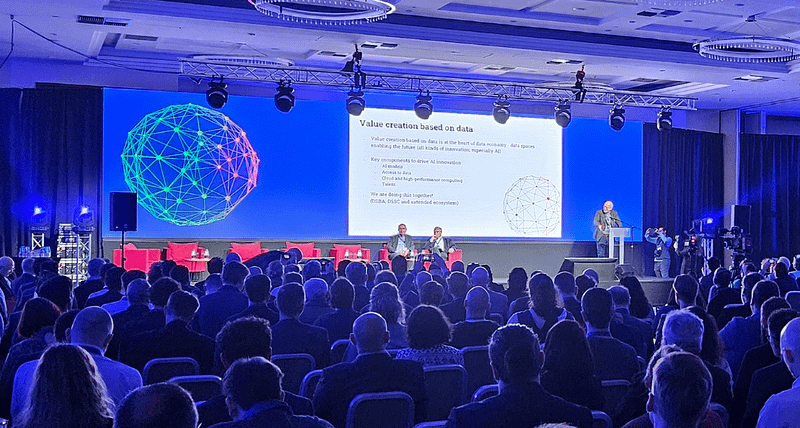
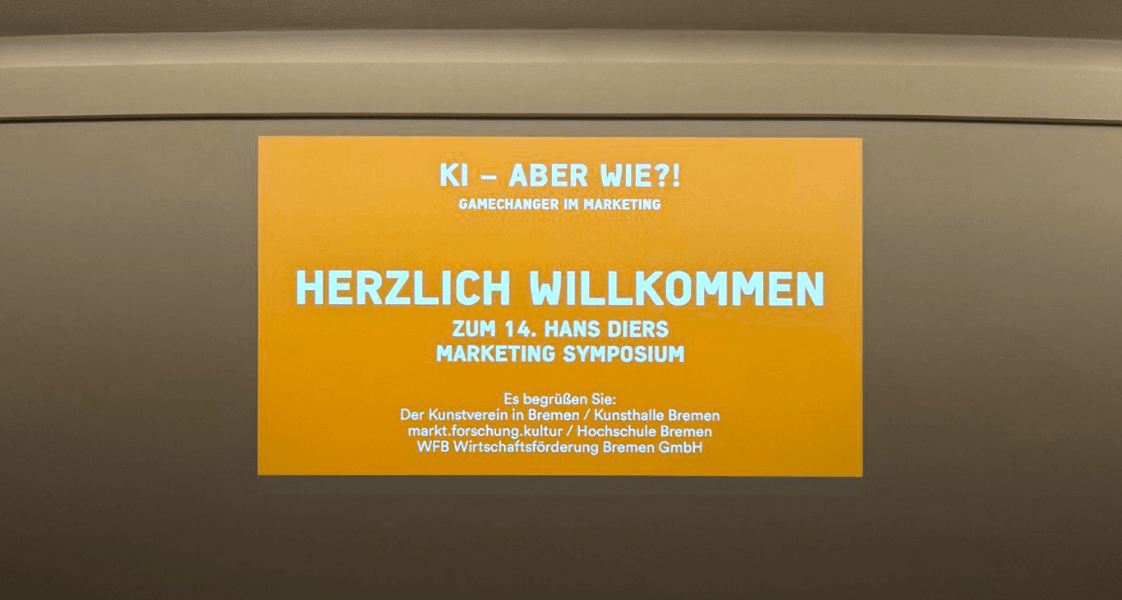
At the 14th Hans Diers Marketing Symposium on 20 and 21 April 2026 in Bremen, precisely these questions took centre stage. In workshops, presentations and discussions, one thing became clear: AI can relieve pressure on cultural organisations, inspire them and enable new ways of working – but only if it is not understood in isolation as a tool, but embedded in clear processes, rules and responsibilities.
From Advaneo’s perspective, it was particularly relevant that many contributions located the foundation for successful AI use not in individual applications, but in data, structures and responsibilities. Good results do not arise from good prompts alone. They require data to be findable, reliable, traceable and usable in a controlled manner. This brings data sovereignty to the fore: anyone wishing to use AI must know which data may be used, where sensitive information is stored, which access rights are permitted, and how transparency can be established for employees, audiences and partners.
Legal and ethical questions were also not treated as peripheral issues, but as part of ongoing operations. Data protection, copyright, labelling obligations, consent and questions of platform dependency show that AI in the cultural context is not only a technical task, but also an organisational one. Cultural institutions need clear guardrails for this: Which tools may be used for which purposes? Which data remains excluded? Where is human review mandatory?
Another focus was the quality of cultural communication. AI can prepare texts, images or translations and make routine tasks easier. However, it does not guarantee a stance, an individual voice or a distinctive aesthetic quality. Precisely for this reason, human responsibility remains central, for example in editorial contextualisation, source work, approvals and transparent labelling.
The symposium made clear that the real game changer is not the machine itself, but the question of how organisations structure their data, processes and decisions. For Advaneo, this connects to a central observation that was also reflected in the audience discussions: data sovereignty is a prerequisite for AI applications to become trustworthy, traceable and usable in the long term. It creates the framework in which innovation is possible without losing control over data, quality and responsibility.
Our conclusion:
AI in cultural marketing is not purely a tool-related topic. It is about data competence, clear processes and responsible digital infrastructure. Those who establish these foundations can use AI not only to accelerate existing workflows, but also as an opportunity to further develop collaboration, mediation and their own cultural mission more consciously.